Our History
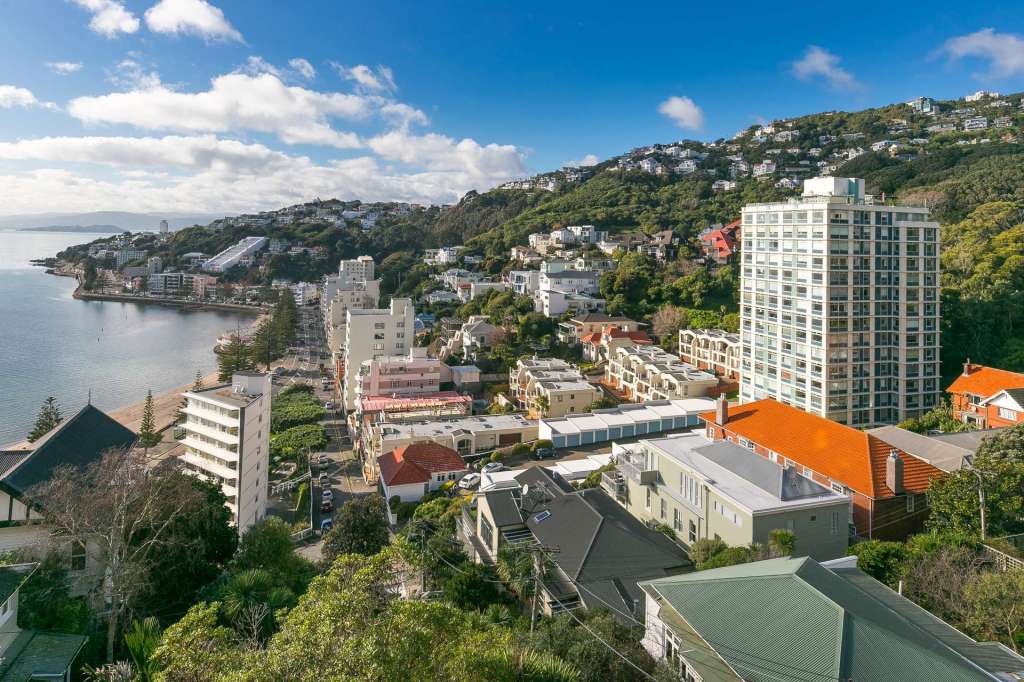
Jerningham Apartments is the largest apartment building in Oriental Bay and one that features groundbreaking design that has influenced engineers around the world.
Often described as the ‘father of ductile design’ in New Zealand, John Hollings was the creator of the “capacity design” that underpins Jerningham Apartments.
He was a graduate from the University of Canterbury and a pioneer of earthquake engineering in New Zealand. Some of his peers considered him the most innovative Kiwi engineer of his generation. In 1968 his firm merged with the Auckland based consultancy to become Beca, Carter, Hollings.
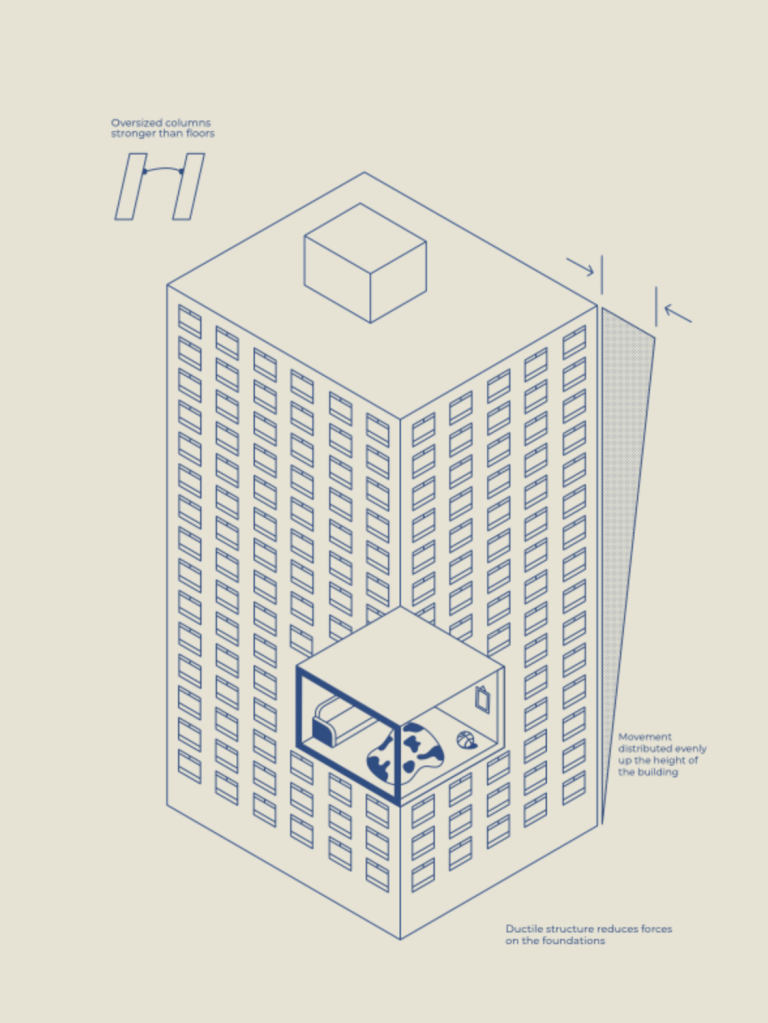
Hollings gave an address to the University of Canterbury in May 1988 when he introduced the concept of what came to be referred to as ‘capacity design’ of reinforced concrete structures; a concept further developed by Professors Park and Paulay at the University of Canterbury. Wellington’s 16-storey Jerningham Apartments was New Zealand’s first building to adopt the technique.
The apartments are on a one-acre site in Wellington’s Oriental Bay. To achieve the best financial return, the maximum possible number of apartments had to be fitted onto the site. To meet town planning requirements, this meant a tall building with 15 floors of apartments (four and five per floor) over a ground floor of parking.
The construction company, Wilkins and Davies, favoured a slip form core with a lift slab floor system. However, compared to the capacity design it would have cost significantly more due to the extra foundation cost required to stabilise the tall, narrow tower.
The capacity design comprises beamless flat plate floors (to get the maximum number of floors within the town planning height limit) and, for the necessary earthquake resistance, a strong frame system is provided all around the building’s perimeter with all plastic deformation designed to occur in the beams, not the columns. Jerningham Apartments has an NBS rating of 85%.
Reflecting on Jerningham Apartments’ design, Beca business consultant Matthew Plummer writes that Hollings’ innovations destined the building to become a “global icon”.
“Hollings’ structure had significantly better seismic performance compared to the conventional approach proposed by the developer; it was also more commercially attractive.
“The revolutionary design reduced the scale of the foundations required, saving 100,000 pounds on the original cost estimate (around $8 million today). And by opting for a low-profile floor system he had fitted in an extra level of apartments for the developer – all of which helped increase the affordability of the high-rise housing needed to accommodate Wellington’s steep population growth.”

“To the casual observer these 1960s behemoths look relatively indistinguishable, but in the world of seismic engineering the large block at 20 Oriental Terrace is a global icon.”
Matthew Plummer
 Jerningham Apartments